Showing posts with label learning style. Show all posts

Thursday, September 18, 2014

Robin Williams in Dead Poets Society

This blog post is a tribute not only to Robin Williams, but also to all the great teachers out there. In the movie "Dead Poets Society", Williams played the role of John Keating, an unconventional English Literature teacher. John Keating's teaching style - it involved tearing "boring bits" out of textbooks - would have horrified sequential thinkers and delighted simultaneous ones. (To read more about Learning Styles, please click here.)

Some famous John Keating quotes include:

  • When you read, don't just consider what the author thinks, consider what you think.
  • No matter what anybody tells you, words and ideas can change the world.
  • We don't read and write poetry because it's cute. We read and write poetry because we are members of the human race And the human race is filled with passion. And medicine, law, business, engineering, these are noble pursuits and necessary to sustain life. But poetry, beauty, romance, love, these are what we stay alive for. To quote from Whitman, "O me! O life!... of the questions of these recurring; of the endless trains of the faithless... of cities filled with the foolish; what good amid these, O me, O life?" Answer: that you are here; that life exists, and identity; that the powerful play goes on and you may contribute a verse; that the powerful play goes on and you may contribute a verse. What will your verse be?
John Keating was their inspiration. He made their lives extraordinary. He was a real teacher.

Thursday, June 05, 2014

What To Read To Your Preschooler

Our readers often ask what books to read to children who've outgrown tactile picture books but are not quite ready for chapter books. Here are our recommendations:
  • The Maisy series with its striking colours so adored by preschoolers worldwide
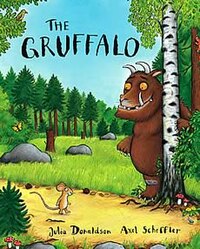
  • Julia Donaldson's Gruffalo (if that one's too scary for your sensitive 3-year old, try other books by this author: Room On The Broom, Monkey Puzzle, The Snail And The Whale)
  • The Cat In The Hat
  • The Little Yellow Digger
  • Charlie and Lola books 
  • The Very Hungry Caterpillar
  • Goodnight, Moon (and Goodnight, iPad!)
  • The Story Of Ferdinand
  • Baby Bumble and the Sock Pirates
  • Tiger and the Temper Tantrum
  • Rumble in the Jungle
Go to the bookstore with your children and let them choose. Sometimes you'll be surprised: "This book, really?" - but go ahead and buy it anyway. This not only teaches the love of books, but also decision-making and having your choice respected.

If your preschooler doesn't want to sit still when listening to the book, let them act out the plot or just hop and and down while you read. The child's learning style probably demands being in motion while concentrating, and this permission to move about will come in handy when your child needs to memorise work for exams later on in life.


Thursday, May 08, 2014

How sequential and simultaneous thinkers use computers to learn


Schools all over the world are doing it: making tablet computers compulsory for students, ordering smart boards, redesigning classrooms into e-learning centres. It’s cool. It’s trendy. It simulates the future workplace. But is it for everybody?  

When it comes to internal information processing, learners will always use either sequential/analytic or impulsive/holistic brain processing and will either need to reflect or think simultaneously about the learning content. Therefore, online-learning situations and course organisation need to take these style differences into account. 

Generally speaking, people with a sequential/analytic dominance are linear thinkers who like facts, details and logic. They want their learning materials neat and organised, and they will read them from the beginning to the end, without skipping around. They learn step-by-step, prefer logical and analytic arguments and focus on details and facts. To cater to their needs, the online-learning package should:
  1. Make frequent use of keywords. 
  2.  Make use of lists and bullet points. 
  3.  Explain all procedures to be used. 
  4.  Detail all the assignments and objectives. 
  5. Underline important facts and arrange them in sequence. 
  6. Proceed step-by-step through detailed information. 
  7. Have a facility to assess the student’s progress frequently. 
  8.  Provide instant and regular feedback on the student’s progress.
Impulsive/holistic processors, in contrast, aren’t interested in details. Instead, they need to know the overall picture and the reasons behind a project. They tend to use their intuition or feelings rather than rationalise about a problem. Their computer-based learning should:
  1. Relate the lesson to the students’ experience. 
  2. Use practical examples. 
  3. Provide an overview of the concepts. 
  4.  Make use of mind-maps. 
  5.  Make use of summaries. 
  6. Allow the students to discover the facts by themselves. 
  7. Allow the students to map, graph or illustrate the material. 
  8. Give positive feedback, even for small achievements.
What is your child's preferred way of learning? Find out.


Friday, February 14, 2014

Tests, Exams and Learning Styles

Because test conditions are stressful for most children, you as a teacher can remove as much of the stress as possible by letting them learn THEIR WAY, and prepare them for tests in fun and playful ways. Remember,
there is no ‘good’ or ‘bad’ learning style, just the ‘right’ way for each student (or groups of students).

Some students, usually the holistic ones, will need to know the reason why there have to be tests at all. Tell them tests are important to monitor progress, to show how well the teacher is doing his or her job (an idea which will appeal to them). This should remove some of the stress from the students as well. Although it’s a generalisation, we found that holistic children tend to get more stressed by test conditions than analytic ones. Removing the time factor, and not letting them feel that there is a strict deadline for finishing the test, may make them perform better.

But most importantly: teach according to their preferred learning style, because information stored in your students’ brains ‘their way’ is always much easier accessed under the stressful conditions of a test and the danger of ‘blanking out’ is greatly reduced. 


Saturday, January 25, 2014

Many copies, none equal

There are many companies selling or even giving away some version of analysis based on Learning Styles.  Some of them are better than others. None are better than ours, at least in our opinion. Here’s why:

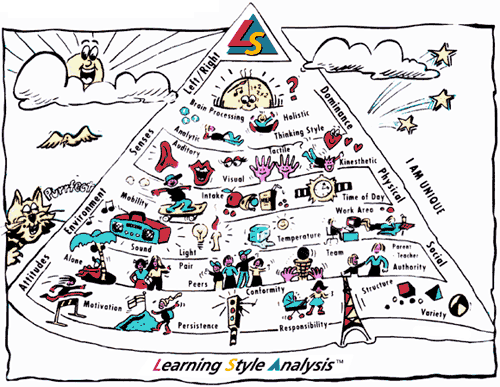
·         In addition to the usual visual-auditory-kinaesthetic analysis, we offer a comprehensive insight into your preferences in terms of working space, time of day, team work, attitude, and many others.

·         Our analysis is based on scientific research and confirmed through many decades of practical applications.

·         Our tool delivers your results in a detailed report with colourful graphs and thorough explanations.

·         The prices of our products are competitive.

We invite you to browse our website, www.clc.co.nz, and discover our Learning Styles for yourselves.


Saturday, January 18, 2014

Five Things Successful Teachers Do

There are lots of things highly successful teachers do differently from their colleagues. Here are the top five:
  1. Successful teachers have fun in the classroom and make learning fun for their students.
  2. Successful teachers communicate with parents, students and fellow teachers.
  3. Successful teachers expect and encourage their students to succeed.
  4. Successful teachers connect with their students and support them emotionally.
  5. Successful teachers know the learning styles of their class.

Saturday, November 30, 2013

How smart are Smart Boards?


A Smart Board combines the simplicity of a whiteboard with the power of a computer. It’s an electronic whiteboard that interacts with users in a number of different ways: it can project the contents of a computer to the entire class (for example, the teacher’s laptop, or the iPad of the student doing a presentation, or from the Internet), and it can also be a gigantic touch screen that registers input from fingers and special Smart Board pens.

This technology encourages active collaboration by students, because it allows them to access large volumes of data, share their findings with others (even those who are not in the same geographic location) and save their work. Even quiet and withdrawn students respond well to Smart Boards and increase their classroom participation through interaction with this gadget.

Visual students love the colourful pens, the images and the video clips. Auditory students appreciate the sounds that accompany their interactions with the Smart Board, such as different beeps to right and wrong answers. Tactile students enhance their learning experience by manipulating data on the touch-sensitive Smart Board.

On the other hand, Smart Boards don’t offer kids an adaptive or individualised learning environment. They don’t provide social feedback. The teacher still controls the content and the lesson plan. At the end of the day, it's still just a blackboard that’s white, more appealing to techno-junkies and more media-enabled.   

Friday, October 04, 2013

Technology At School - Good or Should We Think Again?

Schools all over New Zealand, Australia, Europe and USA are doing it: making tablet computers compulsory for students, ordering smart boards, redesigning classrooms into e-learning centres. It’s cool. It’s trendy. It simulates the future workplace.

But is it for everybody?

By its very nature, e-learning is best suited to highly visual people, because of the wealth of imagery offered by the computer: text, pictures and diagrams, graphs, photos, videos. Please note that we distinguish the following types of visual learners: visual (pictures), visual (reading), visual (internal). While the former two styles are well suited to online learning, the latter one, which relies on forming images in one’s mind, is neutrally suited to online learning (i.e., it is neither enhanced nor limited by the use of computers).

Auditory (listening) learners can be accommodated if the online-learning course uses recorded speech and sound-effects (such as pings). Externally auditory learners who need to discuss the learnt material can be accommodated by using voice chat facilities.

Tactile learners are disadvantaged, although their need can be partially satisfied by touch-pads, mice and/or touch-screens. For the tactile learners, online-learning can be further enhanced by having to match pieces of a puzzle on the screen or match questions and answers using the drag-and-drop technique. Such students can also be encouraged to make their own memory aids offline, such as sculptures of molecules or board games depicting new topics.

The real challenge, however, comes with externally kinesthetic learners who need to move around and learn with their whole bodies. Because they rely on real experiences as the most effective way of assimilating information, online-learning is not ideally suited to this type of learner. To enhance their retention and enjoyment of information intake, the online-learning course should offer off-line projects to enhance the online sessions. These learners need to get away from the computer, move their body and DO something with the information they have just received via the screen. Learning sessions for these students will only be successful (and hopefully lead to understanding, skills, competencies, and knowledge) when they have physically experienced and/or actively ‘done’ something during the learning process.

Is your child visual, auditory, tactile or kinesthetic? Find out today.


Thursday, August 22, 2013

Sport and Your Learning Style


A big part of your school life is probably centred around sport: be it basketball, soccer, rugby, fencing, or skiing.

Just like with anything else in life, the way in which you learn sport techniques and the way in which you play the sport will depend to a large extend on your LearningStyle.
 
Some style features to consider are:
·         Motivation
·         Perseverance/Persistence
·         Responsibility
·         Teamwork or training alone
·         Time of day
·         Need for structure
·         Need for routine
·         Sequential or simultaneous learning.

A beautiful example of this is golf as Wayne Thomas, a professional golf coach near Melbourne, Australia, describes it:

“I have always recognised that there is something missing with coaching, despite the excellent results many of my students reported receiving. What concerns me most is a person’s inability to sustain new levels of performance and continually falling back into old patterns. My continued pursuit of knowledge about golf swing, human movement, mental approach to oneself, equipment and communication skills wasn’t providing the key that would open the gate to the amazing potential we all possess.

When I first met Barbara Prashnig and she put forward the notion that HOW people learn is more important than WHAT people learn, it sparked for me a new era in coaching: I immediately began changing my coaching style and the learning environment to match the students’ learning styles. This has led to astonishing improvements and sustained playing ability in my golf students.”

Do you want to know what your Learning Style is? Click here


Saturday, August 17, 2013

Learning Truths

Truth 1:

If you find learning difficult, it’s probably because your learning style is different from the teaching style of your teachers. You can learn anything you want if you do it in your own preferred way.

Truth 2:

You have the right to learn in a way that suits you best:
·         Using regular or electronic whiteboards, Power Point presentations and typed information sheets;
·         Listening to the teacher explaining subject topics;
·         Discussing new concepts with your peers;
·         Learning through role-playing and physical games;
·        Making something in order to understand it (e.g. posters of chemical reactions, clay models of hydrogen molecules, tactile/visual learning tools).

Truth 3:

Whether you like it or not, learning will always be part of your life:
·         Computer operating systems change every few years and with them the look of your email and browser applications.
·         Mobile phones get better and more advanced - you will have to learn a new interface soon.
·         You will have to acquire new skills on the job all the time in your future career.
·         You will have to learn to live with new friends and partners in your private life.
·         You will most likely want to learn to drive a car, scuba dive, play the latest electronic game, put up a virtual store of your DVD collection or create your own website.
·         You might even want to learn to live in a new country, with a new set of rules and a new language.


Thursday, July 25, 2013

Natural Light and Learning Styles

If you've heard about learning styles, you know that some people prefer to concentrate in dimly lit rooms while others need bright light in order to think properly.

But that's not the whole story. Turns out, if you want a healthier child who gets better grades, let them play outside. Here's why.

No matter what their learning style, students and teachers alike can benefit from utilising natural light in the classroom. A Daystar article, Benefits of Natural Daylighting (1998), states that "there is increased student and teacher attendance, increased achievement rates, reduced fatigue factors, improved student health, and enhancement of general development. Furthermore, natural lighting eliminates noise and flickering from electric light sources and provides the best quality of light available in classrooms, gymnasiums, and corridors. Other research has shown that students in windowless classrooms are more hostile, hesitant, and maladjusted. Also, students in windowless classrooms tend to be less interested in their work and complain more."

Scientists know that the sun is a primary source of vitamin D, and increasing vitamin D intake stimulates calcium metabolism. There is a strong correlation between the amount of sunlight a child experiences and the level of dental decay. This means that day light is a crucial element in cavity prevention. Research shows that students’ rates of dental decay have decreased in schools lit by natural sunlight.

Still not convinced? The Capistrano Unified School District in Orange County, California, observed that the classrooms with the most amount of sun light had a 20% faster learning rate in math and a 26% faster learning rate in reading during one school year when compared to classrooms with the least amount of sun light (Heschong Mahone Group 1999a).

We don't know about you, but we're going to sit in the sun at lunchtime.


Thursday, July 18, 2013

9 Reasons To Do Your Child’s LSA Today

Something Cool to Do

Children love doing the LSA evaluation because there are no right or wrong answers and because the questions are all about them.

3 Versions of the Report

That’s between 10 and 20 pages of easy-to-understand fully illustrated analysis of your child’s learning potential and advice. Your child gets a copy aimed at them, you get a parent copy and you get a copy for the teacher that tells them how to treat your child in class.

Reach Their Potential

Is your child word-visual, picture-visual or internally visual? Externally or internally auditory? Tactile? Internally or externally kinesthetic? Or even all of the above? Find out and you will be directly responsible for their improved performance in 2006.

Is Your Child Gifted?

These may be the signs that your child is gifted:

  • can learn through several sensory modes
  • has a preference for evening or early morning
  • prefers to work alone or with true peers
  • won’t accept authority
  • is internally motivated
  • never gives up
  • dislikes rules
  • doesn’t need help in structuring their learning.
  

Motivation

Carrot, stick or neither? Some people call it bribery, others an incentive. But do you know whether your promise of a special treat will help your child’s work or hinder it? Read their Learning Style report to see whether your child is externally or internally motivated.
  

Goodbye Homework Horrors

The Learning Style report  will tell you how to turn your child’s study area into their favourite place in the house.

Accept Your Child’s Style

You know, when they surround themselves with piles of books, papers and dirty plates with half-eaten apples, it doesn’t mean that they’re trying to annoy you. It may simply mean that they process information in a holistic way. Do their LSA to find out.

Banish Eminem

The Learning Style report  will tell you whether your child will benefit from listening to music while doing homework. But the report will also tell you (and your child) what music is conducive to learning. More importantly, it’ll tell you which music NOT to listen to during study time.

Is Your Child Safe On The Internet?

If your child has a preference for visual and tactile stimulation, if he or she prefers learning alone and structuring their own work, if he or she has a non preference for kinesthetic and auditory activities (all of these available from the Learning Style report ), then the chances are high that they will enjoy spending a lot of time on the computer - possibly in chat rooms. Internet predators look for quiet children, often those who are underachievers socially or academically.

Thursday, November 08, 2012

Exam Anxiety and Learning Styles

Last week, we hosted a guest to talked to us about overcoming fear and anxiety, a topic that's particularly close to the hearts of  those students about to embark on their school and university exams.

Today, we'll take a closer look at how exam anxiety is linked to your own unique learning style. Essentially, the world is divided into two types of people: those who are fine with exams and those who would rather juggle twin-bladed swords.

If you're an analytic thinker, there's a good chance exams don't cause you more than a butterfly flutter in the pit of your stomach. Provided you knew about the date of the exam well in advance, your organised mind scheduled your learning sessions accordingly without your ever realising it.

If you're a holistic thinker, though, you definitely don't like exams, just like you dislike any other deadline imposed on you. Even holistic thinkers, though, have to write exams from time to time. So how do you cope with that? Firstly, realise that the purpose of the exam is to make sure you've mastered the content of the course you're taking - so if you know your work, there's nothing to worry about. Secondly, have a look at your learning style preferences to determine your best studying environment.

Do you learn better:
  • in a quiet room or with background music on?
  • at a desk or on the bed?
  • with a friend or alone?
  • when you're able to chew gum or snack at the same time?
  • in the morning or the afternoon?
  • from a textbook or by doing things?
  • in the sun or indoors?
Find out today.

Would you rather study here (Shangri-La hotel suite, Sydney)...

... or here? (Shangri-La hotel terrace, Sydney)

Thursday, October 11, 2012

How To Implement Learning Styles

What's the one question we're asked more than any other? It's this: how do you implement Learning Styles?

For those visual learners out there, we thought we'd answer with a few videos:
What is your child's learning style?


Wednesday, September 26, 2012

The Power of Multiple Senses

Today's blog post is provided by our guest, Tanja Gardner. Tanja  has a BA in Psychology, Diplomas in Creative Writing and Business Communication, and a Certificate in Technical Communication.

The power of your senses

Our minds tend to form associations through our senses. You might link the smell of popcorn with going to the movies, the melody of a song with the way you felt when you last heard it, or the taste of a fresh tropical fruit with a holiday you took. Anything that engages one of your senses can become a "sensory cue" that your brain links with a mindstate, feeling or memory. The more often, and more exclusively you link a given cue with a particular mindstate, the stronger the association.


Why engage multiple senses?

We humans are usually creatures of more than a single sense: we can generally see, hear, touch, taste and smell. Granted, some of us can't use one of our senses, but most of us get input from more than one sense at a time.

That's important when you're trying to create associations, because there's a kind of synergy that comes from combining different sensory cues. The link will be stronger than if you only used a single sense. In fact, for most people, the more senses you can engage at once, the stronger the link.


Figuring out the right sensory elements for you

Even if they have access to all five senses, many people identify more strongly with one sense than another. Neuro Linguistic Programming (NLP) talks about "sensory modalities" and groups people according to the sense they use most to process information:
  • Auditory people tend to identify most strongly with sound, rhythm and melody.
  • Visual people respond to images, colours and shapes.
  • Kinaesthetic people think in terms of touch, feel, texture and temperature.
  • Olfactory people respond strongly to smell, and gustatory people to taste (although these two are very uncommon as predominant senses).
Actually, most people respond to more than one sense, but you’ll probably identify more strongly with one sense more than the others.


(Creative Learning: Tanja uses the power of the senses to build up personal writing rituals, however, they can also be used when working on any project, be it work, studying or a hobby. Have a look to see how the senses connect to your learning style).


Tanja Gardner is a professional copywriter, word weaver and story spinner at Crystal Clarity Copywriting Ltd.   She helps difference-makers like you write with concise, creative clarity that your readers intuitively “get”.  That means they understand EXACTLY what you offer – so you can make more of a difference in their lives. 
To connect with Tanja, say hello on Twitter or Facebook, or follow her blogOr, discover how to bust through writer’s block with her “Create Your Own Writing Ritual” e-course” – FREE when you sign up for her weekly writing tips.


Wednesday, August 29, 2012

Learning Styles and E-Books

E-books or paper books? Could your personal preference have to do with your learning style?
If you think about it, e-books make sense: they save paper and shipping cost, you can store them mor eeasily, you can carry a thousand of them in your handbag.

Moreover, many e-readers come with an Integrated Dictionary, which allows you to look up words you’re not sure of. The Text To Speech function will read out the text for you, ultimately turning your e-book into an audio book. Colour displays are available on some e-readers. At the moment, you have a choice of bright colour with a computer-like screen (thus losing the like-paper look of e-paper display e-readers), or faded colours with an e-paper display that’s easy on the eyes.

So while the trend towards accepting e-books is continuing, you have to wonder why e-books have not taken over the book world completely. The answer lies in people's preferences, and those can be best illustrated using the framework of learning style elements.

If your learning style displays a strong preference for reading (as opposed to listening), the audio feature of the e-reader is not going to do anything for you. If your learning style indicates a preference for kinesthetic internal input, you may discover you're sentimental and don't want to part with paper books. Similarly, if your learning style has non-preference for change, switching from paper to electronic format is going to cause you stress.

Fortunately, paper books ar enot going anywhere for now.

Did you know?

Most e-readers currently available are made for adults. If your children read chapter books, those e-readers are great for them. Younger children, however, will benefit from bright colourful graphics, easy navigation, sturdiness and minimal weight of e-readers made especially for children, like VTech’s V.Reader. Its e-books are full of colour, animation, sounds and bubbly music.

Thursday, August 23, 2012

Three bad habits that may be good

1. Chewing


Does your child chew her collar, her nails or the pen when she’s concentrating? According to Barbara Prashnig, a world expert in education and the director of Auckland-based Creative Learning Systems, chewing may actually help your child understand the world better. Children’s learning ability is often enhanced by the action of chewing.


2. Wriggling around

Mobility is another important aspect of a child’s learning style. If your child wriggles when asked to sit still, or runs around in circles while you’re trying to talk to him, chances are, he simply needs to move around in order to listen better.

To find out if that’s the case, ask him what you said while he was moving around, seemingly not paying attention. If he can repeat it, it means that mobility is part of his learning process. Remember to talk to his teachers when he starts school and warn them that your child is not being naughty, on the contrary, he’s trying to listen when he wriggles.


3. Asking “why?”

If your child asks, “Why do I have to?”, it’s probably because she genuinely needs to know. Children whose brains work in a holistic fashion need to be given the overall picture before they can focus on the details.

Today it’s: “Why should I clean my room?” Tomorrow it may be: “Why is there no cure for cancer and why don't I try to find it?”


Your child’s learning style consists of 49 elements. Find out your child's unique strengths here.

Thursday, July 05, 2012

July Holidays Special

July means school holidays. No school. None. It's time to relax and... hang on. Did I hear there's a special going on Learning Styles?
That's right! For the entire month of July 2012, we're selling our Home Packages at half price! 2 WSA and 3 LSA Mini! This means:
Home Package. For a happy home.
Just use this promo code when ordering: 796KLU9.
Happy shopping!

Thursday, May 31, 2012

Never Too Late To Learn Your Learning Style

According to research, doing badly in primary school does not always prevent you from getting good results further down your education path. A study which has followed the lives of 500 young people throughout their school careers reveals that it's never too late to seek support from parents and teachers to improve your grades.

What's the starting point in supporting a child who wants to do better at school?
Determine their Learning Style, that unique way in which they learn best.

The Competent Learners study followed the students' progress from just before they started school until they turned 16. It found that over 50% of the children who under-performed as 8-year-olds still went on to graduating from high school.

"The period from age 10-14 appears to be a time when it is particularly important for teachers and parents to watch for signs that children are turning away from school and learning," the study concluded.

What can you do to keep the students focussed on school work? Make sure they're taught according to their Learning Style so their attention span doesn't waver.

A child allowed to learn their way will be happier, better adjusted, better behaved and, never forget, will achieve their potential at school.

Analyse your child's learning style today.

Friday, May 04, 2012

Outdoor Play Good For You Brain

A recent study discovered less than 50% of New Zealand children engage in daily outdoor play, even though most of them live within easy walking distance from a playground or park.


That's despite the fact that outdoor play greatly benefits brain development. Children who play outside every day have been scientifically proved to have better motor coordination, more ability to concentrate, and fewer attention-deficit disorders. 


Outdoor play develops children's imagination and creativity. It helps them socialise, connect with nature, and develop skills to work within teams.


So why don't we place more emphasis on playing outside? The weather and the constant lack of time are often cited as reasons. But perhaps our Learning Styles have to claim some of the responsibility, too? If our children are not kinesthetic and have a non-preference for mobility, it's hard work to get them outdoors, particularly if we ouselves share the same learning style elements.

What is your child's learning style? Find out.