Showing posts with label books. Show all posts

Friday, December 19, 2014

For the teacher in your life

Do you know a teacher? Delight them this Christmas with a unique gift: a present created especially for them.

Barbara Prashnig’s book, “Learning Styles in Action”, is a practical guide to implementing learning styles in the daily teaching practice, thus helping teachers solve any stress and discipline issues.

The newspaper-column-style of the book ensures fast reading. The layout allows the reader to skim and dip into the content at any point, gathering the desired information and enhancing it with the content supplied on the left-hand pages. (These pages partly elaborate the content of the right-hand pages, partly illustrate and explain the concepts discussed on opposite pages.)

The book is full of scenarios and diverse real-life situations. Among others, “Learning Styles in Action” shows you:
  • How learning styles can help underachieving or disruptive students
  • Multi-sensory teaching and learning in action
  • Ways to integrate learning styles and ICT (computer technology)
  • How to create a real learning styles classroom
  • The do’s and don’ts of using learning styles.
Each chapter gives answers to different areas of teaching. Special care has been given to the application of LS in different age groups because despite the same underlying concept and philosophy, teaching strategies, classroom set-ups, and interaction with students vary profoundly from pre-school to university level.

The book also explains the integration of LS with other pedagogic concepts like learning cycles, Multiple Intelligences (MI) and Information Communication Technology (ICT). Most importantly, it also suggests strategies for dealing with discipline issues and disruptive disrespectful students.

Help a teacher today with “Learning Styles in Action”. 


Thursday, November 20, 2014

Learning Resources: Do you prefer technology or tradition?

When it comes to learning, today's technology keeps providing us with the latest and the greatest gadgets. We can access knowledge online, we can experience new skills in simulated environments, we can use our eyes, our ears, and our hands.

Whether you embrace technology or prefer the tried-and-tested resources will depend, in part, on your Learning Style. But here's an interesting argument from IKEA (with our apologies to Apple). Have a look

Wednesday, September 24, 2014

What's better - books or reading online?

There's no doubt about it: exposure to fiction is essential for developing children's imagination. In a way, it matters less whether the format is listening to a book, reading together with a parent or reading by themselves, just as long as they get lost in the imaginary world of book characters.

We usually include e-books and online reading in the same set: as long as it's a book, it doesn't matter whether it's on paper or on the Kindle. However, as early as 2006, an eye-tracking study by scientists at the US-based research group, Nielsen Norman, indicated that people read web pages and books on iPads in an “F” pattern. This means that they scan the top line all the way, then halfway across the next few lines, and then only down the left side of the page, all the way down to the bottom of the article.

This kind of reading is helpful when we're trying to form a quick overview of the text (non-fiction reading), but it doesn't work to yield a deeper understanding of what we’re reading. Wall Street Journal had this to say: "as much as rich multimedia-laden content captures our attention, with a mixture of words, sounds, and moving gifs, videos and image galleries, studies have shown that together they can lead to lower comprehension than just reading plain text."

Something to ponder, for sure, especially if your Learning Style is visual.

Thursday, June 05, 2014

What To Read To Your Preschooler

Our readers often ask what books to read to children who've outgrown tactile picture books but are not quite ready for chapter books. Here are our recommendations:
  • The Maisy series with its striking colours so adored by preschoolers worldwide
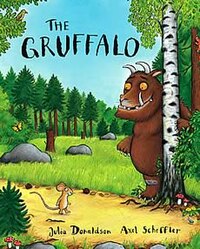
  • Julia Donaldson's Gruffalo (if that one's too scary for your sensitive 3-year old, try other books by this author: Room On The Broom, Monkey Puzzle, The Snail And The Whale)
  • The Cat In The Hat
  • The Little Yellow Digger
  • Charlie and Lola books 
  • The Very Hungry Caterpillar
  • Goodnight, Moon (and Goodnight, iPad!)
  • The Story Of Ferdinand
  • Baby Bumble and the Sock Pirates
  • Tiger and the Temper Tantrum
  • Rumble in the Jungle
Go to the bookstore with your children and let them choose. Sometimes you'll be surprised: "This book, really?" - but go ahead and buy it anyway. This not only teaches the love of books, but also decision-making and having your choice respected.

If your preschooler doesn't want to sit still when listening to the book, let them act out the plot or just hop and and down while you read. The child's learning style probably demands being in motion while concentrating, and this permission to move about will come in handy when your child needs to memorise work for exams later on in life.


Thursday, May 02, 2013

The Ultimate Pinterest Guide for Business

This week's blog post will explore the many ways in which businesses can take advantage of the social networking medium called Pinterest.

Pinterest is a social bookmarking site that allows users to create a visual, online pinboard with images they love organized around topics of their choice by category. It’s the fastest growing social media site in history, the third-largest network after Facebook and Twitter and has over 25 million members and 10 million unique visitors a month. 
 
Because the medium is image-rich and online, it best appeals to people with a visual-tactile working style, with a non-preference for mobility. How many of your clients have such a working style? Check your own working style.
 
Karen Leland, author of the new book “Entrepreneur Magazine’s Ultimate Guide to Pinterest for Business,” has created a comprehensive and easy-to-use guide to hitting the road running and quickly making Pinterest into a valuable source of prospects, promotion and profits. “Great business brands are about telling compelling, congruent stories, and Pinterest is at its core about storytelling in pictures,” says Leland. “Pinterest has tapped into this visceral lover of visuals, and no small business, entrepreneur or corporation can afford to miss the boat on bringing what they offer beyond words and into images.”

“The Ultimate Guide to Pinterest for Business” is designed to help businesses use Pinterest to its maximum potential. The book provides both beginning users and seasoned veterans with the ability to find their specific area of interest “at a glance.” It uses step-by-step how-to, sidebars, examples, case studies, expert interviews and tip sheets to show how, from setup to strategy, to use Pinterest for promotional, branding and marketing objectives. 

The book explores the ins and outs of signing up and getting started on Pinterest and how to create boards that get noticed, drive traffic and convert fans into customers. Special chapters are devoted to creating a strong community and enthusiastic following through high-engagement activities, contests, social media outreach and smart pinning strategies.

In addition the book outlines specific marketing applications to small businesses, from architecture firms to theater companies.  


Karen Leland is the bestselling author of 8 business books including the recently released Entrepreneur Magazine’s Ultimate Guide to Pinterest For Business, which can be purchased at http://bit.ly/Amazonbook. She is the president of Sterling Marketing Group, where she works with small businesses and Fortune 500 on building stronger personal and team brands. She writes the Modern Marketing Blog at www.karenleland.com.

Thursday, December 16, 2010

Secrets of successful teaching: flexibility and matching styles

(excerpt from "The Power of Diversity" by Barbara Prashnig)


1. Matching students’ learning styles with the appropriate teaching styles will always lead to successful interaction between teachers and their students, and result in improved learning outcomes as we have seen in this chapter.


2. High flexibility for achieving genuine style matches is maybe more important, and teachers need to be confident in choosing their methods and strategies, and must be prepared to try something else when the usual methods don’t work. This ‘something else’ should not be trial and error, but based on a sound knowledge of students’ learning style needs. But isn’t that what teachers are supposed to do anyway, you might ask. Supposed maybe, but very few teachers are actually flexible enough to change their methods according to their students’ learning needs because most teachers have a very limited repertoire of teaching methods - remember, they have all been trained by the same analytical system - and when the few well-known strategies don’t work, they are soon at their wits’ end, blaming everyone and everything else for their students’ failure and finally give up on them.


Another reason for this unfortunate situation is the fact (again based on research findings and our own

experiences in data collection) that teachers are among the least flexible people of all professional groups. The majority have very strong preferences based on analytic, left-brain dominance, paired with very strong beliefs about what’s right and wrong in learning. They find it very hard to flex and adjust, prefer to stay with what they know, even when this knowledge is outdated, and generally resist change.


(...) It is quite obvious that educators need to become more flexible, and teachers who are now working

with learning styles realise that it is they who have to be the most flexible person in class. Highly flexible people usually get on well with others and you probably remember one or the other teacher who was well-liked by everyone, who always found a way to get on with others and were a great inspiration for the young ones.


(Purchase link: "The Power of Diversity" by Barbara Prashnig)

Thursday, September 23, 2010

More provocations for better classroom management

(excerpt from The Power of Diversity by Barbara Prashnig)

Fallacy 6: Eating should not be permitted in classrooms during lessons.

Many students concentrate better when they can concentrate better when have something to eat, nibble, chew or drink while learning, and many teachers will have observed that a number of students chew on whatever they can get hold of during classes, particularly when they have to listen for a while, when they are bored or nervous. It seems that mouth stimulation helps them concentrate, and as the brain dehydrates during thinking processes, it is essential that students are allowed to have drinks of water whenever needed.

Students with a high need for intake should be allowed to have healthy snacks, and with good management techniques there will be no mess in class. Thousands of teachers who have successfully introduced a ‘healthy nibbles policy’ are proof that it works, and discipline, together with student performance, improves significantly.

Fallacy 7: Effective teaching requires clearly stated objectives followed by detailed, step-by-step, sequential explanations until students understand what’s being taught.

While holistic, right-brain dominant learners tend to grasp large concepts first and then deal with the related facts and details, analytic, left-brain dominant learners pay attention to the facts first and use them for building up the whole concept. Only these are the ones who work well with step-by-step teaching. Many, probably most, teachers use analytic styles and a few teach only holistically, using a lot of creativity. Every teacher should (and successful teachers always do) include elements of both styles in their teaching.

("The New Look of Learning and Teaching", excerpt from The Power of Diversity by Barbara Prashnig)

Wondering what the learning needs are in your classroom? Start here.

Thursday, September 02, 2010

A Question of Learning Styles: What has gone wrong in education?

Let’s consider formal education and ask a few formal education questions:

  • How many thousands of hours do students sit in classrooms experiencing lectures or lectures, deadly boring activities which bore them to death, which stifle activities their curiosity, and their spontaneously emerging interest?
  • What happens when a child experiences uncertainty about details of the presentation?
  • How many hundreds of hours do they spend reading books?
  • And again, what can students do when they encounter something they do not understand or evokes their curiosity? Will they raise their hands and ask?

Only those who are not easily intimidated. The majority of students, however, learn to ignore all but their most powerful urges. Slowly but surely their experiences at school result in a deadening of school experiences kill their inner sensitivity.

Unlike the way children learn informally before and outside school, the entire educational system discourages them from ‘tuning’ into their own inner learning processes. They become conditioned to disregard their own meaning, their learning needs, disregard their (learning) style and individuality in favour of acquiring machine-like behaviours and uniform outcomes uniform outcomes favoured by the system and those who represent it.

Consider the following: before children go into children learn by formal education, they learn miraculously by developing an inner sensitivity for their learning processes which is their day-to-day experience for years. When they go to school, in the process at school of being taught various subjects, the message they receive now is: what goes on inside your head is meaningless, pay attention and do as we tell you!

This whole dilemma has nothing to do with teachers’ intentions; this is not the issue. The problem is not WHAT is being taught but HOW it is done. The formal environment and traditional teaching methods continually discourage children from remaining sensitive to their own most essential capacities for learning. It’s the overall education experience education experience which turns, almost as a rule, highly energised, turns curious, eager and alive children into mainly tired, alive children into uninterested, uneasy, bored and frustrated students.

This is true for schools in every country I have visited so far, from Finland to Hong Kong, from New Zealand to Sweden, from the US to Denmark. And what’s even more alarming, this unfortunate development can be seen everywhere - despite the school, the teacher, even the socioeconomic family status of the student.

(excerpt from The Power of Diversity by Barbara Prashnig)

Wondering how to put it right? Start here.

Thursday, June 24, 2010

Use Creativity Correctly in Your Media Relations

(a guest post by Jonathan Bernstein)

Creative writers and thinkers can be some of the best – and some of the worst – media sources. Because we’re creative, we’re good at coming up with what journalists call “golden nuggets,” pithy sound bytes which make their stories read or sound better. For example, I’m fond of talking about the “Three C’s of Crisis Communications,” the notion that a good communicator needs to come across as Confident, Competent and Compassionate. Reporters eat that up. Ditto for another phrase I coined some time ago, “In the absence of communication, rumor and innuendo fill the gap.”

However, there is such a thing as being TOO creative, and getting caught up in hyperbole that turns a good interview into what sounds – to a reporter – like advertising copy or like someone trying to sound cute for cute’s sake, both being a real journalistic turn-off.

So, with that introduction, please enjoy this excerpt from Keeping the Wolves at Bay – Media Training:

Welcome to a new way of thinking about media relations. Even if you have given many ‘good news’ interviews in the past, you’re almost certain to say or do things you’ll regret if you have not been media trained when in a ‘high pressure’ media interview situation. Heck, you may say or do things you’ll regret even if you are media trained – but it’s less likely!

There are some other benefits to this process. Formal media training will:

· Help you develop and refine key messages, to see what really works under the stress of simulated interviews ( and good media trainers will make you forget it’s simulated).

· Optimize your chances of achieving balanced coverage. You’ll notice I say ‘optimize’ – there are no guarantees in this arena.

· Improves skills that transfer to many other types of public speaking – e.g., community presentations, testifying at hearings or in court, giving webinars, etc.

· Allows you to identify who’s an effective spokesperson in general, and who, specifically, may be better for different types of interviews. See Section 4: Media Logistics. And who, perhaps, should not be a spokesperson at all.

In the six years since I published the first edition of this manual, I have seen a dramatic difference in the results of my media training when trainees read the manual pre-training. I think it would have the same result no matter who conducted the training, so I encourage you to take the time to make that happen.

Media relations is, of course, only one component of crisis communications (CLS footnote: Working Style Analysis is another), one of many methods of getting messages to your stakeholders, both internal and external. In times of crisis it’s absolutely essential that your communicators be trained in all those methods. And that they practice their skills regularly, which is why this manual now includes, for the first time, a special section about how to practice media interview skills effectively without a trainer present.

(We invite you to join us for the Keeping the Wolves at Bay virtual tour. The schedule and more details can be found at http://bookpromotionservices.com/2010/04/28/keeping-wolves-bay-tour/. For more information and to get your copy, visit http://www.thecrisismanager.com/ or http://www.amazon.com/Keeping-Wolves-Bay-Media-Training/dp/1450582206)

Friday, May 07, 2010

Story Magic - Bring Stories to Life with Learning Styles

We all agree how important it is for the next generation to love books, right?

Absolutely!

But when it comes to books, it's not all about reading... not only about the skill of reading. It's also about the actual stories. Stories are a useful way to teach children our values (it pays to be noble and righteous, because good overcomes evil in the end), introduce the concept of "baddies" in a loving, secure environment, as well as inform us about the way things work (from making soup to what a hearing aid is).

All children love stories, so it makes sense to smuggle in new and difficult information to them using the medium of the written word...

... except, of course, not everybody's learning style is visual (words), in other words, not all children enjoy having to read the words themselves.

What is a parent to do?
  • If your child is auditory (internal), click here to listen to children who read stories to other children.
  • Children who are auditory external may prefer to read the stories out loud and to re-tell them to you in their own words.
  • If your child is visual (external), watch this site.
  • Kinesthetic children will enjoy acting out the stories as you read them out loud.
  • Tactile children may want to draw or make the characters from the story, participate in reading touch-and-feel books, or even make ordinary books into tactile books themselves.
To determine your child's learning style, start here.

Thursday, August 06, 2009

Is Empathy Helping or Hurting Your Career?

By Judith Orloff, MD
(Adapted from "Emotional Freedom")

AM I AN EMPATH?
- Have I been labeled by coworkers as "too emotional" or overly sensitive?
- If a co-worker is distraught, does it affect my mood at work?
- Are my feelings easily hurt when a supervisor or peer delivers negative feedback?
- Am I emotionally drained when I have to work closely with others, and do I require time alone to revive? (see footnote 1)
- Do my nerves get frayed by office noise, machine noise, smells, or excessive talking? (see footnote 2)
- Do I prefer working quietly and off by myself? (see footnote 1 and footnote 2)
- Do I overeat or need a happy hour cocktail to deal with work-related stress? (see footnote 3)

If you answered yes to any of these questions, you're at least part empath. Responding yes to more than three indicates that you're quite sensitive and empathic.

THE EMPATH'S UPSIDE AT WORK
You are big hearted, and big-hearted people are gifted helpers and mentors. Empaths are patient, kind, and compassionate--just what you need as a manager, trainer, or team leader.

You are passionate, and passionate people put their all into projects. Empathetic people are passionate about their beliefs and ideas. In creative roles, or as sales or marketing people, passion is a plus.

You are intuitive, and intutive people can read between the lines. Empaths often perceive gray areas in a discussion or sense unspoken tension in meetings. Their ability to read others' feelings is a critical skill in negotiating and personnel management.

You are an emotionally responsive person, and that means you are a great communicator. Listening is an essential business skill, and those who are best at it are emotional empaths who have a well-developed ability to relate to others, and then interpret or build on what they see and hear.

You are "in touch" with your emotions, which means others can connect well with you. We most admire and best relate to people who are authentic. In other words, they show their emotions. In the business world, being "real" helps you build networks, earn the loyalty of others, win clients, and forge alliances.

THE EMPATH'S DOWNSIDE AT WORK
You're an emotional sponge. Super empathetic people tend to pick up on others' emotions. This can be detrimental when a cool-headed leader is needed, or when an objective perspective would yield a clearer decision.

You're prone to anxiety, depression, and fatigue. If you're always tuned in to coworkers' feelings, it's difficult to keep your nerves from getting frazzled. You need to be able to process emotions coming at you from all directions.

You may find it hard to work well with others. Empaths often need to work alone, and they seek solitude in order to regain their calm. Others may see you as antisocial.

If you are a super sensitive and empathetic person, be aware of the ways this wonderful trait serves you in the workplace. But be extra careful to protect your emotional and physical health, because empathetic people are, by definition, more vulnerable and open than their peers.
www.drjudithorloff.com.

***To purchase “Emotional Freedom” with 100 free gifts from noted transformational leaders such as Dr. Christiane Northrup, Dr. Michael Beckwith, Dr. Bruce Lipton, Shirley Maclaine and more go to :

http://www.drjudithorloff.com/emotional-freedom-promotion/

Judith Orloff MD is an assistant clinical professor of psychiatry at UCLA. This article was adapted from her new book, Emotional Freedom: Liberate Yourself from Negative Emotions and Transform Your Life (Harmony Books, 2009, $24.95), which is on The New York Times and Wall Street Journal bestseller lists. For more information on Dr. Orloff, visit ww.drjudithorloff.com.


***To purchase “Emotional Freedom” with 100 free gifts from noted transformational leaders such as Dr. Christiane Northrup, Dr. Michael Beckwith, Dr. Bruce Lipton, Shirley Maclaine and more go to :

http://www.drjudithorloff.com/emotional-freedom-promotion/


Footnote 1: The ability to tolerate, even welcome, noise in your workplace is a result of your Working Style Preferences. Please click here to see whether you need background noise in order to concentrate.

Footnote 2: The preference for working alone or in a group is a Working Style Element. Please click here to see your optimal work group.

Footnote 3: The tendency to nibble is ingrained in Working Style. Please click here to see what you need when you work on something new or difficult.


All footnotes are authored by Creative Learning.