Friday, November 04, 2011

Learning Styles and Exam Preparation

Barbara Prashnig explains the importance of understanding the role of learning styles in studying and exam preparation:

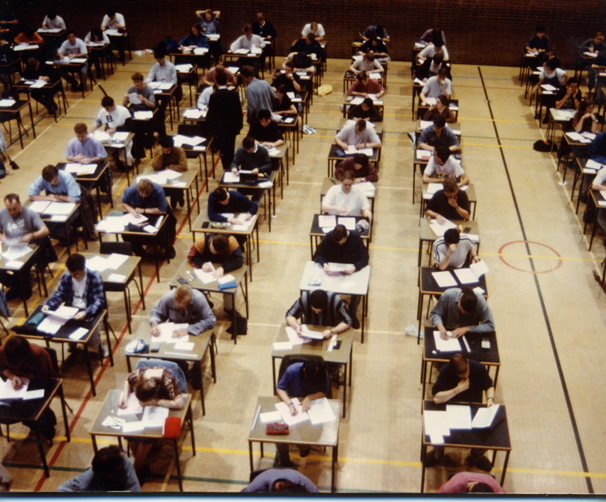
"Thousands of students will soon be preparing themselves for the next round of exams in schools all over the world. Many will suffer from anxiety, frustration and despair because they know they are fighting a losing battle.

Considering learning styles in the context of information intake (learnining) and output (sitting exams), our research over the last twenty years shows that the points of difference are this:

a) During the presentation of new and/or difficult information in class, learning styles need to be accommodated to ensure understanding, longterm memory and the best possible learning.

b) When students study and prepare for exams they need to be made aware of their personal learning styles and should be allowed to learn in their own way, in the right environment, and with the most appropriate study techniques for their own style.

c) During tests and exams, learning styles are not so crucial because most students have enough flexibility to cope with adverse situations; this is especially true when the learning process preceding the exam has been accomplished with teaching methods matching their personal learning styles. When students are allowed to learn in their best way, they understand and remember better and are much more confident in showing what they know in an exam situation, even when their personal learning styles are not being matched during the exam. Yet they are less prone to failure or having memory lapses because with LS based study techniques, curriculum content is more readily available, even under pressure."
Friday, October 28, 2011

E-Course: Last Chance to Register

Here, at Creative Learning, we are dedicated to the subject of learning. This means learning in all its forms and in every environment; from formal settings to home study to the workplace. Our speciality is HOW we learn, before WHAT we learn. If you'd like to learn more about Style Analysis (the HOW of learning), here's an opportunity for you: we are offering an online course during the first ten days of November 2011. Please email info@clc.co.nz to register. Teachers, parents, students - all welcome.

Friday, October 21, 2011

Reminder: Our Learning Style E-Course in November

Have you ever wondered what it implies for a child’s learning when they are highly holistic or internally motivated? Or looked at a group profile of your class and compared it to your own Teaching Style Analysis report?


Now is the time to dig deeper into the concept of Learning Styles.

When: 1 - 10 November 2011

Where: online

How much: USD149.00


Click here for more information.

Wednesday, October 12, 2011

The Secret of Personal Learning Style Differences

Our popular online course (Introduction to LSA) is back!
When: 1 - 10 November 2011
Where: online
How much: USD149.00
We don’t have set times when you have to be in front of the computer - do it at your own leisure. Nor do we have Real Time participation, though email participation is encouraged. 
Classes will be held on a designated Yahoo Group. The way it'll work will be fairly structured yet informal, to accommodate all learning styles and most schedules:
  • the tutor will post a lesson on the forum (this will be available on the yahoo group's website and as an email sent to your address), usually with homework assignments
  • the participants will ask questions, post feedback and share homework - all by means of an email/post to the yahoo group
  • although the lessons will be posted on designated dates, the participants will be free to do them whenever it's convenient, bearing in mind that it's always best to do it when most of the class is doing it, of course....
Click here for more information.

Friday, October 07, 2011

The Art Of Doing Nothing

The Chinese philosopher Lin Yutang once said that an afternoon spent doing nothing is an afternoon well spent. When was the last time you can honestly say you did nothing the entire afternoon? Imagine a whole afternoon, five precious hours of it, spent gazing at the clouds, or lying in the grass watching toddlers stick fingers into each others' nostrils, or with a trashy book.

If your working style has a preference for high responsibility, high perseverence and sequential processing (goal-driven), you'll probably feel guilty if you're not busy. It may seem too decadent, or simply wrong, to devote precious hours of free time to… nothing.


We have lost the fine art of not doing. Our lives are full of traps to ensure we fill our time. The devil makes works for idle hands? Bah! The devil actually makes idle unimportant work for hands that are too busy to notice the difference.


Think of all the emails we feel obliged to respond to, all the newspapers we feel we should read to remain "current", all the web sites we visit out of habit. Do clothes really need to be ironed? What's wrong with eating takeaway or popcorn for dinner on a weekly basis? What's the point of applying make-up only to wipe it off again at the end of the day?


It's time to stop feeling guilty about walking out of bad movies, it's time to stop feeling guilty about giving books ten pages to grip you and putting them aside if they fail the test, and it's high time to start feeling guilty about all the time-fillers we clutch to in order to avoid doing - nothing.


Next time you're waiting at a supermarket checkout, resist the temptation to flick through all those magazines you wouldn't normally buy. When stopped at a red traffic light, be grateful for the pause. Grab every single opportunity to be out there and do nothing. Remember, it's an art. And it's far more difficult than you think.

Now for the test. Click here to do nothing for two minutes. This mini-break was brough to you by Creative Learning, because we care.


Thursday, September 29, 2011

The Misunderstood Child

Learning Styles are a scientific miracle cure capable of addressing many problems a child experiences at home and at school, such as homework aversion, being disruptive, being bullied, underachieving. Sometimes, however, learning difficulties are not simply a result of a mismatching learning style.

Sensory Processing Dysfunction

Dysfunction of sensory processing is a neurological problem with processing sensations. Children interpret sensation from the environment or from their bodies in an inaccurate way: sensory-seeking, sensory-avoidance and dyspraxia. All three variants have to be diagnosed by a specialist and are usually treated using sensory integration therapy (a fun process in a sensory-enriched gym with lots of swinging, spinning, tactile, visual, auditory and taste opportunities).

Sensory Seeking


Children with sensory dysfunction do not necessarily exhibit every characteristic, for example, a child with vestibular dysfunction may have poor balance but good muscle tone, or show characteristics of a dysfunction one day but not the next.
 Children with "sensory seeking" behaviour do not always process incoming sensory input. They may appear hyperactive, engage in dangerous activities (climbing too high), be unaware of pain or extra loud sounds. Their learning style will typically include tactile and/or kinesthetic preferences.


Sensory Avoidance

Children with "sensory avoidance" hate crowds, noise, dirty hands, walking on sand and being touched. Their learning style will typically not include tactile preferences.


Dyspraxia

Children with dyspraxia (a motor planning problem, also known as Developmental Coordination Disorder), have trouble learning new things even though they may be very intelligent. The problem is that the connections that link the brain to the rest of the body don’t work properly, and the child’s body finds it difficult to do what the brain is telling it to do. Lots of practice usually helps to master a new skill.


The dyspraxic child may display the following symptoms:
seem clumsy,
  • not know today what they knew yesterday,
  • not understand multiple instructions,
  • be disorganised,
  • lose things,
  • have illegible handwriting,
  • not know how to draw,
  • be bright and intelligent, but fail academically.
Their learning style will typically exhibit holistic preferences.

What learning preferences does your child exhibit?

Find out.

Thursday, September 22, 2011

Homework + Learning Styles = The Creative Way

The Question of Creativity

Is homework in your household creative? Creativity is the ability to produce something new, to generate unique ideas and solutions. The process of creating should be a fun energizing activity. Is homework in your household fun and energising?

Learning Styles
It should be. It can be. With the help of learning styles.


Kinesthetic - the child learns better through own physical experiences:


·        Bake a cake together to teach conversion from grams to kilograms.
·        Pantomime or act out a history lesson.
·        Play a board game to discover new facts.
·        Take a field trip to the zoo, a court house, a factory.

Tactile - the child has a strong need to use hands when learning:
·        Make use of question-answer jig-saw puzzles), electro- boards (a bulb lights up for every correct answer), flip chutes, etc.
·        Encourage your child to make their own memory aids: sculptures of molecules or board games depicting new topics.

Visual - the child remembers and understands best through watching:
·        Create a mind-map, illustration, cartoon, poster, slide show, costume, historical time line, illustrated report.
·         Watch a DVD about the topic (“The King and I” about Thailand, “Little Einsteins”).

Auditory - the child likes to interact verbally:
·        Make a learning tape together with your child. Let her explain the new topic into the tape recorder.
·        Discuss the lesson together.
·        Encourage your child to compose and record a song, a poem or a radio play about the topic (e.g., World War II, global warming, flower pollination, Mexico).
What is your child's learning style? Find out.