New Zealand and Australia are in mourning following the tragedy in the Pike River coal mine, in which 29 brave men have lost their lives. We at Creative Learning join in condolences for the victims' families and friends. For almost a week, we prayed for a miracle, encouraged by the uplifting story of the Chilean gold miners. Sadly, the conditions in the two mines were vastly different and the finality of the second explosion at Pike River ended our hopes.
We use Learning Styles every day of our lives, whether we're aware of it or not. The way we think, the way we read, the way we treat our partners... it's all encoded in our Learning Styles. Do you want to see yours?
WWW.CREATIVELEARNINGCENTRE.COM
Thursday, November 25, 2010
National Disaster - Flags at Half Mast
New Zealand and Australia are in mourning following the tragedy in the Pike River coal mine, in which 29 brave men have lost their lives. We at Creative Learning join in condolences for the victims' families and friends. For almost a week, we prayed for a miracle, encouraged by the uplifting story of the Chilean gold miners. Sadly, the conditions in the two mines were vastly different and the finality of the second explosion at Pike River ended our hopes.
Thursday, November 18, 2010
Learning Styles of Creative Minds
- you read newspapers and watch TV on your computer...
- ... in fact, a few months ago you witness the rescue of 34 Chilean miners from 700m below the ground....
- you talk your friends and family across the oceans via a personal computer...
- ... or via a phone you carry around in the street....
- Integrated with a tendency towards holistic
- Non-conforming
- With a preference for change
- Multi-sensory
- High perseverance
Thursday, November 11, 2010
The 3 Levels of Literacy

Adult literacy is an emerging issue in highly developed countries, one that will have to be addressed within the next few decades. Although most school-leavers can read and write, and can figure out 15+24 without the aid of a calculator, their education had failed them nevertheless.
Thursday, November 04, 2010
The Learning Style of a Bully
... and yet the face of the bully remained the same.
With the Anti-Bullying Week upon us (15-19 November 2010), many people make a point to speak out against the problem. This is fantastic. Four in every five pupils are not involved in bullying incidents, i.e., they are neither the bully not the victim, yet they seldom have the opportunity to do something constructive.
- through a physical act,
- with shouting, intimidating gestures, pulling mean faces,
- by saying hurtful things about them,
Thursday, October 28, 2010
Maths and Tactile Learning Styles
- Tactile learners love plastic counting beans - they are colourful and smooth and a pleasure to touch.
- You can also use coins, board game tokens, dry beans, M&Ms, raisins... anything with an interesting texture.
- Board games are good for tactile learners. Try Snakes&Ladders played with two dice to practice addition.
- Cuisenaire Rods are a great visual as well as a tactile learning tool.
- Create your own Bingo board game where you read out a multiplication problem (3 times 4, or "John has 5 rows of 5 marbles, how many marbles does he have") and your child covers the answer on his Bingo Board.
- Tactile people prefer writing, sculpting or carving the answers. Allow your child to write them in glue and pour sand onto the wet glue to make the grains stick. He can shape them from play-dough. You can find him an old piece of soft wood (a plank) and let him carve in the answers with his pen (remember the old days when "naughty" children wrote on their desks? it feels sooo good to sink your pen into soft wood!!!)
- Tactile learners love computer games. Computer games are both a blessing (educational games really do aid education) and a curse (they are addictive), so it's your choice whether you'd allow it, but have a look at http://www.mathletics.co.nz/ and http://www.coolmath-games.com/.
- For other hand-on maths tools, please see http://www.ehow.com/math-manipulatives/.
Thursday, October 21, 2010
THE GREAT SALESPERSON—A LISTENER

THE GREAT SALESPERSON—A LISTENER
We often think of a great salesperson as a spin artist—a big talker—never at a loss for words and blessed with the gift of gab. Well in today’s world of business sales, that is no longer true. In fact, the best salesperson may be the best listener, not the best talker!
So the learning styles that used to be associated with sales success are no longer the most appropriate. And that opens up a lot of space for thoughtful people, quiet people, those who like to deal with facts and process information in chunks rather than those who get the big picture quickly and run with it.
If you are a quiet, thoughtful person and you are in sales, or interested in sales, there are many ways to cultivate your gifts. The best of these is to learn how to ask great questions.
If you are going to make sales by listening to your prospective customers, empathizing with them, understand their needs and the problems they are trying to solve, you will need to have expert ways to help them tell you the things that you want to listen for. That means you will need to be prepared with a steady stream of pertinent, probing questions that are not offensive and that invite a rich conversation between you and your prospect.
Here are some characteristics of great questions:
· They are open-ended. They invite discussion and commentary, not a one-word answer.
· They are circumspect. Maybe you want to know if the person you’re speaking with is the ultimate decision maker. But in a big company, multiple people are involved in the decision. So you can ask, “Who else will be affected by your decision?”
· They are historical. Great questions ask someone to talk about how they did it last time, or another time, so that you get a factual account that is predictive of future behavior.
· They are narrative. They invite someone to tell you a story, to get involved, to get engaged with you.
Great listeners are not listening for what they hope to hear. Rather, they are listening to the truth as understand by the person or people with whom they are conversing. If the truth is there’s no budget, we’re not going to make a change at this time, I don’t have time to think about that right now, or if we did make a change it would probably not be with you—wouldn’t you rather know that sooner than later? You can have one conversation and gracefully exit until a better time.
Big talkers are going to miss many key signals early in the sales process, causing them to pursue fruitless deals far too long. On the other hand, good listeners will be in tune with the real circumstances early on.
So let’s re-think our notions of the “salesperson learning style.”
If you are in sales or interested in sales, I invite you to join The Whale Hunters online community, Pier9, (http://www.thewhalehunters.com) where you will find a wealth of resources for sales and business development, including many resources about how to ask great questions.
Happy Hunting!
Barbara Weaver Smith
October 2010
The Whale Hunters is a strategic sales coaching company that helps small businesses achieve explosive growth by landing bigger deals with bigger customers. Our business development process has consistently helped hundreds of companies create a repeatable, disciplined sales culture that optimizes the company’s ability to land and harvest whale-sized accounts in any economic climate.
Thursday, October 14, 2010
Will Your Child's Learning Style Make Them A Smoker?
As we mentioned before, habitual smoking and learning styles go hand in hand. One of the greatest predictors of whether a person will become a smoker is their preference in the Intake and Tactile elements of the LSA Pyramid (Learning Style Analysis Pyramid).
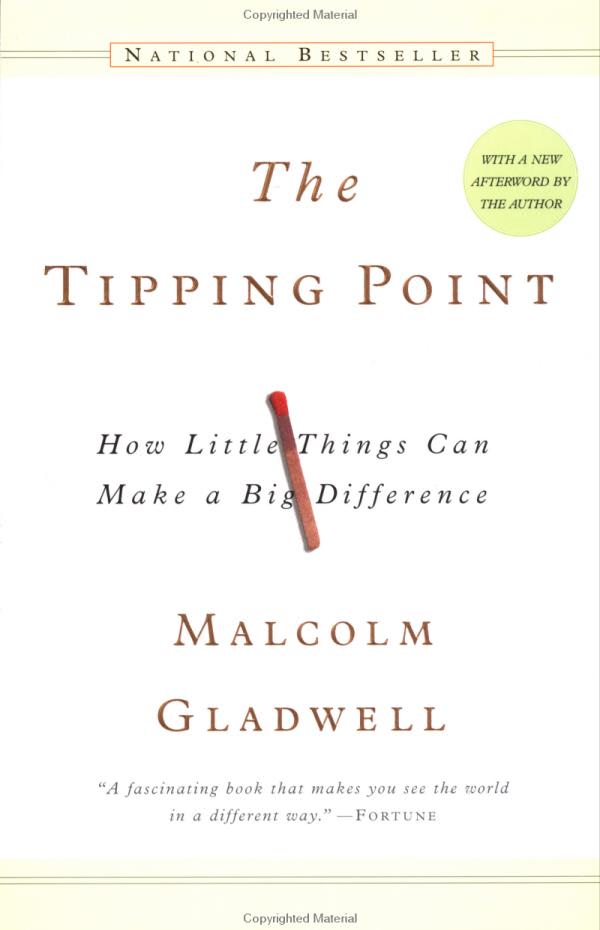
However, Malcolm Gladwell mentions other elements in his bestselling book, "The Tipping Point". Backed by British psychology research, he identifies the following traits of quintessential hard-core smokers:
- is sociable, likes parties (and therefore probably has a Learning Style with a preference for learning within a group)
- needs to have people to talk to (probably has a Learning Style with a preference for External Auditory Input)
- takes chances and acts on the spur of the moment (a preference for Impulsive Thinking)
- prefers to keep moving (a preference for Mobility)
- and doing things (a preference for Kinesthetic Input)
- not always a reliable person (a non-preference for Reliability).